

TL;DR: Effective supply chain risk management means moving beyond Tier 1 visibility and addressing hidden vulnerabilities in deeper supplier networks. Tier 2 suppliers face a 21% higher disruption risk, and Tier 3 suppliers up to 38%, yet few organisations conduct full due diligence before contracting. The foundation is supply chain mapping—identifying all suppliers, locations, and dependencies to assess exposure. From there, resilience comes through:
- Structured risk management: identify, prioritise, and mitigate financial, legal, environmental, and labour risks using risk matrices and supplier prequalification.
- Supplier diversification: avoid single points of failure by sourcing across geographies and maintaining dual suppliers for critical inputs.
- Collaborative planning: share forecasts and data transparently with partners to improve visibility and reduce lead times.
- Inventory strategy: blend just-in-time efficiency with just-in-case buffer stock and apply ABC analysis to prioritise high-value items.
- Technology and AI: use digital dashboards and predictive analytics for real-time risk monitoring, freight tracking, and early disruption alerts.
- Culture of risk awareness: train staff, form cross-functional risk committees, and simulate disruption scenarios to embed proactive management.
Resilient supply chains depend on continuous visibility, strong supplier relationships, and a company-wide risk mindset. Investing early in mapping, diversification, technology, and culture turns disruption into a competitive advantage.
Supply Chain Risk Management
Supply chain disruptions struck hard in 2022 – who could forget? The stockouts at Tier 1 suppliers were keenly felt, but most of the risk sat with Tiers 2 and 3. Most supply chain risk management strategies still overlook these critical areas, leaving businesses exposed to threats lurking deeper in their supplier networks.
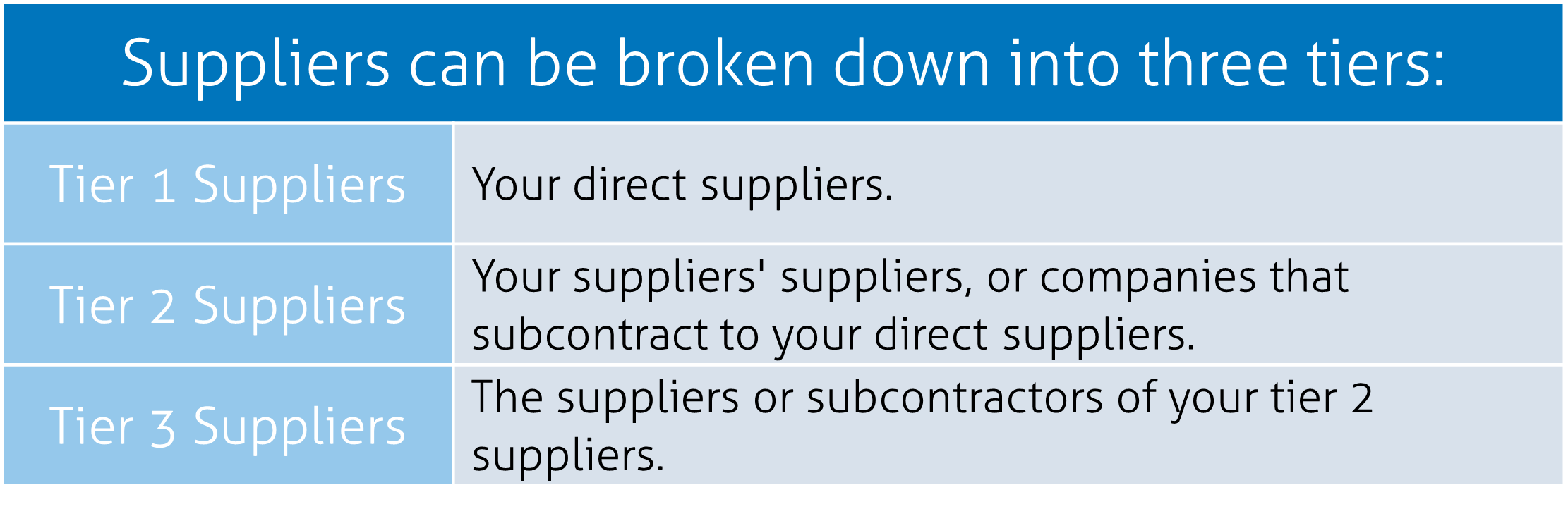
The vulnerability increases dramatically as you move through supplier tiers. According to the Boston Consulting Group (BCG), tier two suppliers face a 21% higher disruption risk than tier one suppliers, and tier three suppliers face a 38% higher risk than tier one suppliers. Yet most organisations remain underprepared—only one in six conducts due diligence on all key suppliers during procurement, while a quarter delays these crucial checks until after signing contracts.
Many organisations have systems in place to manage their Tier 1 suppliers, but risks often reside deeper in the supply chain. Subcontractors, indirect suppliers, and service providers at Tier 2 can introduce significant vulnerabilities, especially when they operate without the same level of oversight.
This preparedness gap reflects a broader challenge across global supply chain risk management. A 2022 Gartner survey showed that only 21% of businesses consider their networks highly resilient, though more than half expect to achieve this status within a few years.
The following is an outline of proven methods for the supply chain risk management process used by businesses worldwide, from identifying risk types to implementing practical resilience strategies that protect your operations from unexpected disruptions.
Understand and Identify Supply Chain Risks
Effective supply chain risk management starts with recognising what can go wrong. Supply chain risk refers to anything that could compromise product or service delivery, increase costs, or damage a company’s reputation. Most companies are inadequately prepared to handle these risks, with 43% lacking complete visibility into even their tier 1 suppliers, according to a 2023 KPMG study of 300 global supply chain managers.
Known vs Unknown Risks
The foundation of global supply chain risk management involves distinguishing between known and unknown risks. Known risks can be anticipated, measured, and managed over time. These include cybersecurity threats that organisations can monitor and plan for, as well as supplier unreliability, which can be assessed based on financial history and performance records.
Unknown risks, alternatively, are those that organisations cannot realistically foresee, such as highly unusual natural disasters or the sudden eruption of a long-dormant volcano. While impossible to predict, organisations can still prepare by:
- Building strong defensive layers across operations
- Creating a risk-aware culture throughout the company
- Focusing on the speed of response when disruptions occur
Industry experts suggest that reducing the probability of unknown risks and increasing response speed when they materialise is critical for maintaining competitive advantage.
Types of Supply Chain Risk: Financial, Legal, Environmental, and Labour
Financial risks appear in two forms. External financial risks include factors outside an organisation’s control, such as unfavourable exchange rates, inflation, or the bankruptcy of trading partners. Internal financial risks are those that an organisation can prevent, such as overspending or unplanned changes that require additional funding.
Legal risks encompass contract disputes with suppliers, patent infringements, product liability lawsuits, and failures to provide employees with minimum entitlements. Additionally, companies face increasing compliance obligations.
Environmental risks manifest through natural disasters, causing widespread damage to production facilities and delivery timelines. Furthermore, ecological risk includes harmful emissions or improper waste disposal by a company or its suppliers. Climate-related disasters are becoming more frequent, with 18 separate billion-dollar natural disasters reported in the United States in 2022 alone.
Labour risks emerge when organisations cannot find skilled employees to complete their work, jeopardising timelines and output. These shortages particularly impact companies experiencing seasonal demand surges.
The Supply Chain Risk Management Process
Supply chain risk management (SCRM) represents a systematic approach to identifying, assessing, and mitigating risks across your end-to-end supply chain. With over 70% of companies now prioritising risk resilience as a top investment, implementing a structured SCRM process has become essential rather than optional.
1. Assess Your Risk Exposure
Start by mapping your entire supply chain to gain comprehensive visibility.
A 2022 Deloitte report found that only 13% of companies have fully mapped their supply chains, with many having no visibility beyond their immediate suppliers. This lack of comprehensive visibility is a significant challenge, as many companies lack the necessary data collection, validation, and analysis infrastructure to map their multi-tiered supply chains effectively, according to a DLA Piper analysis. A comprehensive mapping exercise should document:
- Who each supplier is
- What they provide
- Where they are located
- Where they fit in your supply chain hierarchy
This information must include your Tier 2 and 3 suppliers, especially since more than half of all supply chain disruptions occur within subtiers. Update supplier lists regularly, adding new partners and removing those no longer used.
Supply chain mapping provides numerous benefits beyond risk identification. It creates a deeper understanding of costs and supplier interdependencies. Additionally, mapping helps identify potential bottlenecks and opportunities for improvements while revealing dependencies you may not be aware of.
Ultimately, mapping serves as the foundation for building a risk management, supply chain due diligence, and sustainable sourcing programme. Without this visibility, organisations remain vulnerable to disruptions that can devastate operations and significantly impact bottom lines.
2. Prioritise Risks Based on Impact and Likelihood
Once you’ve identified potential risks, evaluate them systematically using risk scoring models. Assign values based on:
- Likelihood of occurrence
- Potential impact on operations
- Detectability of early warning signs
A risk matrix helps quantify which threats require immediate attention and which can be monitored. This objective evaluation ensures you allocate resources efficiently toward addressing risks with the greatest potential impact on operations.
3. Prequalify and Evaluate Suppliers
Effective supplier prequalification minimises risk by ensuring suppliers meet predetermined criteria before being invited to offer their services. This process provides enhanced confidence that suppliers can deliver what’s promised. Consider factors such as:
- Financial stability and credit ratings
- Quality management systems and certifications
- Compliance with regulatory standards
- Historical performance records
Organisations that implement mature supply chain audit processes are 80% more likely to comply with their sector’s regulations.
4. Diversify your Supplier Base
Reliance on a single supplier creates a dangerous single point of failure. Instead, implement geographic diversification by seeking suppliers in different regions. For critical components or materials, establish dual-sourcing arrangements to ensure continuity if one supplier experiences difficulties. This strategy reduces operational disruption and minimises dependencies when a trade route becomes blocked or a supplier ceases operations.
5. Plan Collaboratively with Partners
Collaborative planning with suppliers and partners strengthens your entire supply chain. Share production requirements with suppliers and obtain their commitments to identify potential shortages before they become problems. This transparency allows both parties to synchronise operations, minimise delays, and enhance overall productivity. Joint planning initiatives help align goals across all supply chain partners.
6. Monitor Insurance and Compliance
Establish a cadence for reviewing existing suppliers, at least annually. During these reviews:
- Adjust vendor criticality ratings based on performance
- Evaluate whether to continue relationships
- Assess insurance coverage adequacy
- Review compliance with contractual obligations
Implement robust monitoring systems for ongoing risk management, including regular audits and performance evaluations against key metrics. Monitoring ensures suppliers maintain compliance with contractual obligations and regulatory requirements.
7. Share Data and Forecasts Transparently
Real-time data sharing significantly enhances supply chain agility. Facilitating seamless communication among stakeholders enables timely decision-making and proactive problem-solving. Organisations that share demand forecasts and inventory levels can avoid stockouts and overstocking. This collaboration leads to:
- Reduced lead times across the supply chain
- Enhanced forecasting accuracy
- Optimised resource allocation
- Improved responsiveness to market changes
8. Review and Update Risk Plans Regularly
Risk management is an ongoing, cyclical process rather than a one-time exercise. Review the impact of disruptions (or near misses) to gain crucial insights for refining existing risk mitigation measures. Create a feedback loop with teams across your business to identify gaps in your strategy. Conduct frequent supply chain risk assessments to anticipate disruptions, adapt to market shifts, and test the strength of your mitigation strategies.
Build Resilience Through Inventory and Operations
Inventory strategy has evolved from a cost-reduction focus to a critical resilience tool. We understand that businesses across industries are rethinking their approach to inventory management after experiencing the vulnerabilities of ultra-lean operations. This strategic shift recognises that operational resilience demands thoughtful inventory positioning and coordinated production processes.
Just-in-Case vs Just-in-Time Inventory
Companies spent decades perfecting just-in-time (JIT) inventory management to minimise costs by maintaining minimal stock levels aligned with immediate sales expectations. Recent supply chain volatility has prompted many organisations to reconsider this approach. The emerging solution combines JIT efficiency with just-in-case (JIC) inventory—a strategic buffer stock that protects against supply chain disruptions.
JIT systems excel at operational efficiency by precisely aligning material orders with production schedules, reducing storage costs and eliminating surplus materials. JIC inventory systems take a different approach, prioritising substantial stock levels to protect against supply and demand uncertainties. Adequate stock levels serve as operational insurance, preventing lost sales and production stoppages when suppliers face delays or unexpected demand surges occur.
Risk Pooling and Buffer Stock
Risk pooling is a fundamental principle of supply chain risk management. The concept operates on statistical principles: demand variability decreases when demand is aggregated across multiple locations, products, or time periods. Centralised inventory allows high demand from one customer to offset low demand from another, reducing overall variability and uncertainty.
Strategic risk pooling delivers measurable benefits:
- Reduced safety stock requirements and lower average inventory levels
- Decreased risk of obsolescence with simplified inventory management
- Enhanced service level maintenance during demand fluctuations
- Optimised resource allocation, preventing stockouts
ABC inventory analysis provides valuable guidance for buffer stock decisions. The ABC technique classifies items into three categories (A, B, and C) based on their value to prioritise control and resource allocation. Class A items are the highest-value items, often representing a small percentage of total inventory but a large portion of total value (e.g., 10-20% of items accounting for 70-80% of value), and require the most control. Class B items have medium value, and Class C items are the lowest-value items, often making up a large portion of inventory but contributing the least to total value. The goal is to focus larger inventory investments on these “A” category items or their critical components.
Harmonise Production and Technology
Standardisation across platforms, products, and facilities creates operational resilience within your supply chain risk management process. Platform harmonisation integrates software systems and technologies throughout the supply chain, enabling seamless data flow between partners. Product harmonisation standardises specifications and packaging, simplifying both production and distribution processes.
Manufacturing consistency across facilities through plant harmonisation ensures uniform practices, equipment, and quality control. This alignment minimises disruptions when shifting production between locations and optimises overall operations. Investment in technologies like blockchain, AI, and IoT provides essential visibility, transparency, and control for mitigating supply chain risks.
Advanced analytics and demand forecasting tools help balance competing priorities: excess inventory that ties up capital versus lean inventory that increases stockout risk. Flexible manufacturing processes and modular product designs enable rapid pivots when market conditions change, strengthening operational resilience.
Improve Visibility and Cybersecurity
Supply chain visibility is the foundation of effective risk management, and technology is your primary tool for maintaining operational awareness. Companies with digital dashboards experience half as many disruptions as those without such tools, underscoring the importance of technological investment for maintaining competitive advantage.
Use supply chain risk assessment software.
Supply chain risk assessment software delivers the real-time insights required to manage complex global operations effectively. These platforms integrate disparate data sources to establish a single version of the truth, enhancing decision-making. In 2022, McKinsey found that two-thirds of companies implemented new risk management practices in the previous year and nearly three-quarters planned to increase their resilience budgets, recognising their value in identifying vulnerabilities before they escalate into operational crises.
We recommend platforms that offer:
- End-to-end visibility across all supplier tiers
- Real-time monitoring of potential threats
- AI-powered risk analysis and prioritisation
Customisable Risk Dashboards for Different Stakeholders
These tools should uncover supply chain weaknesses and threats whilst being customised to your organisation’s unique risk profile. Most importantly, they should utilise your existing supplier data to provide complete visibility into potential vulnerabilities.
Track Freight Carrier Metrics
Monitoring carrier performance metrics enables early identification of potential disruptions. Effective monitoring systems should include regular audits and performance evaluations against key metrics, allowing data-driven decisions about your logistics partners.
Constant monitoring remains the cornerstone of successful supply chain risk management practices. Tracking these metrics helps you assess the effectiveness of your risk mitigation strategies and identify areas requiring improvement.
Secure your Digital Supply Chain
Cybersecurity represents a critical dimension of supply chain risk management, affecting sourcing, vendor management, continuity, quality, and transportation security. Companies are increasingly drafting contracts with suppliers that prioritise cybersecurity best practices, establishing acceptable standards for risk, breach notification protocols, and security systems maintenance.
We understand that cybersecurity extends beyond technology—it encompasses people, processes, and knowledge. Most breaches result from human errors rather than technology failures. There should be no separation between physical and cybersecurity, as attackers often exploit physical security gaps to launch cyber attacks.
Create a Culture of Supply Chain Risk Awareness
Resilient supply chains are about a collective corporate mindset where risk awareness becomes embedded across your entire organisation as much as they are about individual expertise. When you foster this culture, every employee becomes a vigilant guardian of your supply chain, reducing vulnerabilities and improving response times during disruptions.
Train Employees on Risk Protocols
Risk awareness training forms the backbone of effective supply chain risk management. Educating employees about risks and their specific roles in mitigation significantly reduces supply chain vulnerabilities. Training programmes should be ongoing and interactive rather than one-off sessions.
Here are key strategies for maximum effectiveness:
- Customise content for different roles to improve engagement and relevance
- Use real scenarios and feedback loops to reinforce learning
- Ensure employees know exactly who to report risks to and how to access reporting systems
Leadership plays a crucial role in cultivating this culture. Leaders must openly acknowledge the importance of risk management and consistently communicate its value across the organisation.
Establish a Risk Committee
Forming a cross-functional risk management committee with representatives from different departments ensures diverse perspectives are considered throughout your risk management process.
Your risk committee should include:
Both non-executive and executive directors, with the majority being non-executive independent
- Members conversant with risk management principles and standards
- Regular meetings at least three times annually, with direct reporting to the board following each session
Use Data to Model Risk Scenarios
Decision Support Systems that incorporate Big Data Warehouses and simulation models can enhance decision-making during risk scenarios. These tools allow you to test disruptions interactively, with users triggering various events at different simulation times using adjustable parameters. This approach virtualises your real system to assess potential disruption impacts.
These strategies help you build a risk-aware culture where every employee understands their role in supply chain protection and actively contributes to your organisation’s overall risk management strategy.
A role for AI
Artificial intelligence is rapidly becoming one of the most powerful tools for building risk-proof supply chains. By analysing massive volumes of data from suppliers, markets, weather systems, and transport networks in real time, AI can detect disruptions before they happen and recommend agile responses to keep goods moving. Predictive analytics models can forecast demand surges or raw material shortages, helping businesses adjust procurement and production plans early. Machine learning also enhances visibility by uncovering hidden dependencies and risks across supplier tiers—something traditional monitoring can miss. Whether it’s optimising shipping routes, automating inventory management, or assessing supplier reliability, AI turns complex supply chain data into actionable insights that reduce exposure, save costs, and build resilience.
Conclusion
Building a risk-proof supply chain requires dedication, foresight, and systematic planning across your entire organisation. Companies today face unprecedented challenges, with disruptions occurring at every tier of their supply networks. The methods outlined throughout this article provide a practical roadmap for strengthening your supply chain against both known and unknown risks.
Supply chain mapping stands as the foundation of effective risk management. Without visibility beyond your immediate suppliers, your business remains vulnerable to disruptions that originate from deeper supplier tiers. This mapping process, followed by thorough risk assessment and prioritisation, enables you to allocate resources efficiently towards addressing the most significant threats.
Operational strategies play an equally vital role in supply chain resilience. The shift from purely just-in-time inventory to hybrid models incorporating strategic buffer stocks helps shield your operations against unexpected disruptions. Risk pooling, combined with harmonised production processes and technologies, further strengthens your ability to adapt quickly to challenges.
Technology serves as a powerful ally in modern supply chain risk management. Companies with digital dashboards experience significantly fewer disruptions than those without such tools. These platforms provide real-time monitoring of potential threats, end-to-end visibility across supplier tiers, AI-powered risk analysis, and customisable dashboards for different stakeholders.
People ultimately make the difference between vulnerable and resilient supply chains. A culture of risk awareness, where every employee understands their role in identifying and mitigating risks, significantly reduces your vulnerability. Training programmes, risk committees, and scenario planning all contribute to this cultural change.
The journey towards a risk-proof supply chain never truly ends. Supply chain risk management demands ongoing attention, regular assessment, and continuous improvement. Though only a minority of businesses currently consider their networks highly resilient, your organisation can join their ranks by implementing these proven methods.
Supply chains that survive—and thrive—despite disruptions deliver competitive advantage in uncertain times. The investment you make today in understanding risks, building resilience, improving visibility, and creating a risk-aware culture will pay dividends through enhanced operational stability and customer satisfaction for years to come.
We understand that implementing these strategies may seem daunting, but taking the first step towards comprehensive risk management will position your business to handle whatever challenges lie ahead. Contact us today to learn how our supply chain solutions can support your risk management objectives.
_________
Magellan Logistics offers comprehensive freight and logistics services, including customs clearance, project logistics, and our MagTrack digital freight portal, providing 24/7 visibility of your shipments. Contact one of our freight specialists on 1800 595 463.
_________
About David Thatcher: David, founder of Magellan Logistics, has built a global career in freight forwarding. With international leadership experience and Harvard training, he remains committed to client needs and nurturing his team.
Supply Chain Risk Management FAQs
What are the key components of an effective supply chain risk management process?
An effective supply chain risk management process involves assessing risk exposure, prioritising risks, evaluating suppliers, diversifying the supplier base, collaborative planning, monitoring compliance, sharing data transparently, and regularly reviewing and updating risk plans.
How can companies improve supply chain visibility?
Companies can improve supply chain visibility by using risk assessment software, tracking freight carrier metrics, and implementing digital dashboards. These tools provide real-time insights, enable early identification of potential disruptions, and support data-driven decision-making.
What is the difference between just-in-time and just-in-case inventory strategies?
Just-in-time (JIT) inventory aims to minimise costs by stocking only what’s needed in the immediate future, while just-in-case (JIC) inventory maintains buffer stock to protect against supply chain disruptions. Many companies now use a hybrid approach to balance efficiency with resilience.
How can organisations create a culture of risk awareness in their supply chain?
Organisations can create a risk-aware culture by training employees on risk protocols, establishing a cross-functional risk committee, and using data to model risk scenarios. This approach empowers every employee to become vigilant in identifying and mitigating supply chain risks.
Why is supply chain mapping important for risk management?
Supply chain mapping is crucial as it provides comprehensive visibility of all suppliers, including those in deeper tiers where many disruptions originate. It helps identify vulnerabilities, dependencies, and potential bottlenecks, forming the foundation for effective risk management and sustainable sourcing strategies.
Sources:
Strategic Management Consulting | Boston Consulting Group
Gartner | Delivering Actionable, Objective Insight to Executives and Their Teams
Sievo | Procurement Analytics Software
Thomson Reuters: Clarifying the complex | Thomson Reuters
MYOB: Business software you’ll never outgrow
Audit, Compliance, & Risk Management Software | AuditBoard
Ivalua | Procurement, Spend & Supplier Management Software
National Institute of Standards and Technology
Sedex: Your partner in Ethical and Sustainable Supply Chain Management
SAP Software & Solutions | Technology & Business Applications | SAP Australia & New Zealand
Department of Housing and Public Works
(PDF) Impact of Real-Time Data Sharing on Supply Chain Agility and Performance
Supply Chain News, Analysis, Videos, Podcasts and Resources – Supply Chain 24/7
Supply Chain Risk Management: an Interactive Simulation Model in a Big Data Context – ScienceDirect
Custom Logistics Solutions for Manufacturers & Shippers